Private stroke coaching does not replace a swim team. It gives one athlete time to isolate mechanics, see what is happening, and practice corrections that can be difficult to address while a team coach manages an entire group.
Team practice builds the engine
Club practice develops conditioning, race pace, consistency, and the ability to perform while tired. Swimmers learn to follow a set, train alongside teammates, and prepare for competition. There is no substitute for showing up and doing that work.
The team coach is also responsible for the whole pool: running the workout, watching safety, teaching the group, and keeping many swimmers moving. Even an excellent coach cannot pause every lane each time one athlete needs a longer technical explanation.
One-on-one coaching isolates the detail
In a private session, every repetition belongs to one swimmer. The coach can focus on a head position, catch, body line, kick, breath, turn, underwater, or breakout and see how the athlete responds to a cue.
That feedback is specific. Instead of trying to apply a correction intended for the group, the swimmer can ask questions, repeat the movement, and learn what the change should look and feel like.
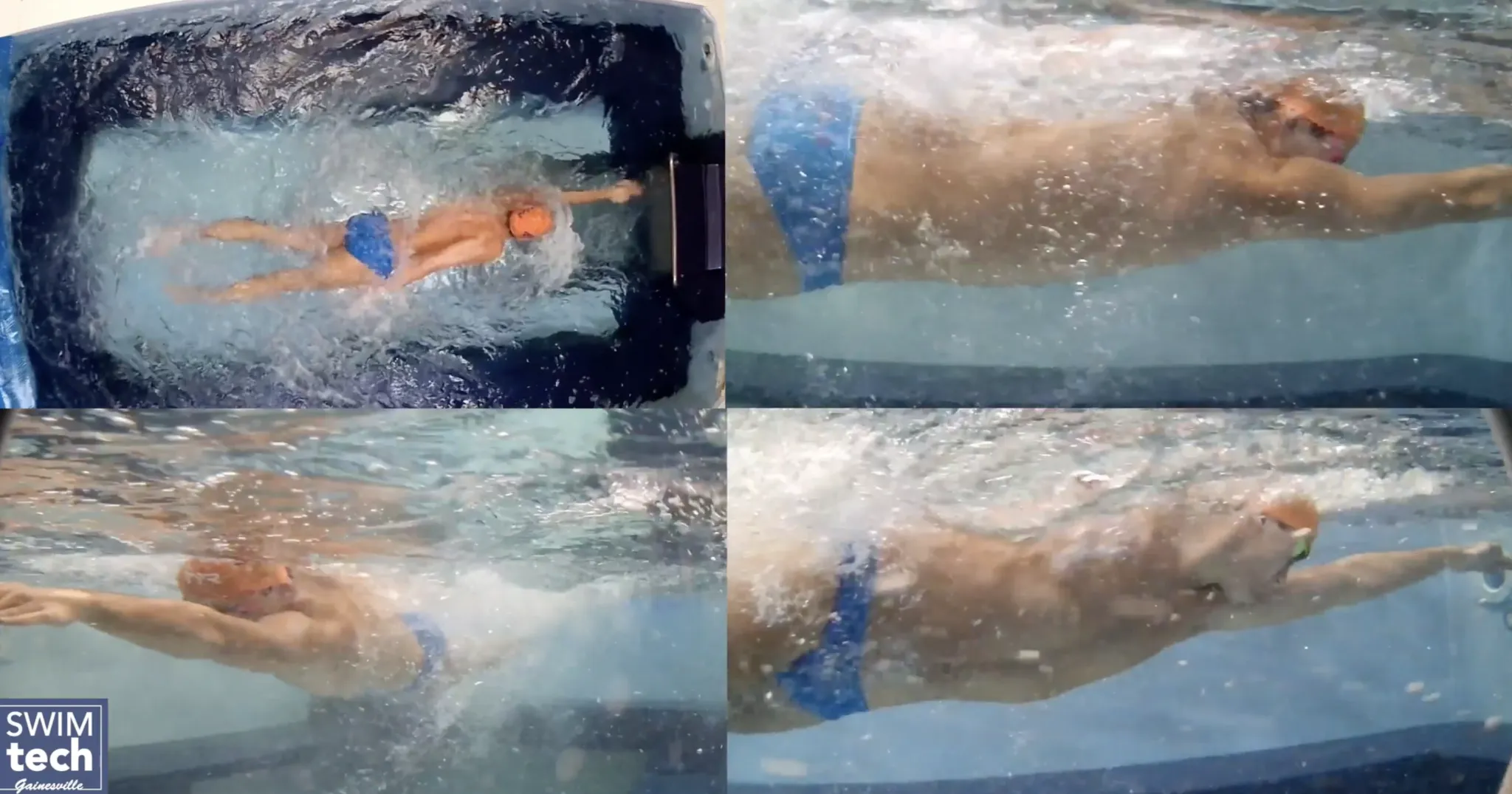
SwimTec’s stroke analysis and technique coaching adds multiple camera viewpoints when video will help. Footage can reveal timing and alignment that are difficult for a swimmer to feel from inside the stroke.
Mental preparation supports the work
Competitive swimming asks athletes to manage nerves, confidence, goals, and focus under pressure. A technical session can create a quieter place to talk through the cues or routine the swimmer will carry into practice and competition.
The aim is not to promise a particular result. It is to help the athlete understand the controllable pieces: preparation, attention, effort, and the movement being practiced.
Strength supports repeatable technique
Good mechanics still have to hold together as the swimmer becomes tired. Core control, shoulder stability, mobility, and swimming-specific strength can support body position and power through a race.
Dry-land work and stroke coaching have different roles. A qualified strength professional manages the exercise plan; pool feedback can show which positions or movements the athlete is trying to support. When the two are aligned with team training, the swimmer has a more coherent picture of the goal.
Private coaching should return to the team
The correction matters only if the swimmer can repeat it outside the private lesson. That is why the session should finish with a small number of useful cues rather than a complete rebuild of every stroke.
The swimmer can take those cues into team practice, notice when the old pattern returns, and use the regular workload to make the new movement more dependable. A primary coach can also review captured footage when the swimmer wants the technical work coordinated with the team’s plan.
Who can benefit from focused coaching
One-on-one work can help a competitive swimmer whose times have plateaued, an athlete learning starts and turns, or a future team swimmer who needs more confidence with the four strokes and lane habits.
For swimmers who are not yet on a team, swim team prep focuses on stroke fundamentals, streamlines, body position, kicking, breathing, timing, and endurance. For established competitors, stroke analysis can go deeper into the technical details already present in training.
Bring one clear goal
The best starting point is a question the swimmer and coach can examine together: Why does the breath disrupt freestyle? What happens to the streamline off the wall? Which part of the turn loses speed? How does the stroke change under effort?
A clear goal keeps the session practical and makes the feedback easier to use afterward. Book a 1:1 SwimTec session when your swimmer is ready to focus on the detail.