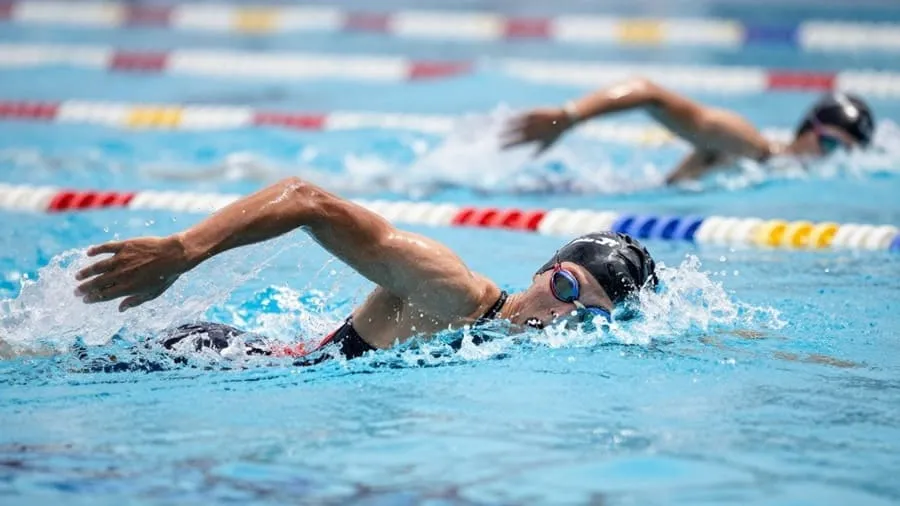
The swim is only one part of a triathlon, but it sets up everything that follows. Efficient technique, familiar equipment, and a calm plan can help an athlete leave the water ready to bike and run instead of spending unnecessary energy in the opening leg.
1. Letting breathing interrupt the stroke
Breathing should fit into the stroke rather than stop it. Lifting the head too high, holding the breath, or turning late can disturb body position and add drag. A quieter head turn and a steady exhale underwater help keep the movement connected.
Practice the pattern until it feels familiar at more than one effort level. A breath that works during an easy warm-up should also remain controlled when the pace rises.
2. Training only in a pool
A pool is an excellent place to improve technique, but open water adds conditions that lane lines and walls remove. Athletes need to be prepared to sight, manage a start around other swimmers, and keep a steady rhythm without relying on a wall every length.
Open-water practice should happen in an appropriate, supervised setting. The aim is to make the environment more familiar before race day, not to add avoidable risk.
3. Using equipment for the first time on race day
Goggles, a tri suit, and any race-legal wetsuit should be tested during training. Goggles need a dependable seal and usable visibility. A tri suit needs to remain comfortable across the swim, bike, and run. A wetsuit must fit well enough to allow shoulder movement and should be used only when the event’s current rules permit it.
Training in the actual equipment also reveals practical details: how the goggles sit under a cap, whether a seam rubs, and how a wetsuit changes body position. Race morning is a poor time to discover any of those issues.
4. Chasing effort instead of efficiency
Working harder does not automatically create a better swim. If the legs sink, the breath breaks rhythm, or the catch slips, extra effort may simply create more resistance.
SwimTec’s triathlete swim training can focus on body position, breathing, pacing, sighting, and holding technique as effort increases. One-on-one feedback gives the athlete a chance to isolate the specific part of the stroke that is using too much energy.
5. Starting without a pacing plan
The energy and contact of a race start can tempt a swimmer to go out harder than planned. A steadier start may make it easier to establish breathing, find space, and settle into a sustainable rhythm.
Practice a start routine in advance. Know what cue will bring attention back to the stroke if nerves rise: a controlled exhale, a patient first few strokes, or a focus on body line. The routine should be simple enough to remember under pressure.
How private coaching fits a triathlon plan
Triathlon preparation includes more than pool technique, and swim coaching does not replace open-water experience or the athlete’s broader training plan. It can, however, make the swim work more specific.
At Rosen Aquatic & Fitness Center, a coach can observe the athlete’s current mechanics and work on the details that matter to that swimmer. The Orlando location provides a professional aquatic setting for private technical work before those changes are practiced in the rest of the training plan.
Keep race day familiar
The strongest preparation is repeatable: equipment already tested, a breathing pattern already practiced, an honest pace, and a response for moments when the water feels crowded or unfamiliar. Nothing needs to be improvised at the start line.
Want focused help with the swim leg? Book a SwimTec triathlete session and bring your race goal to the pool.