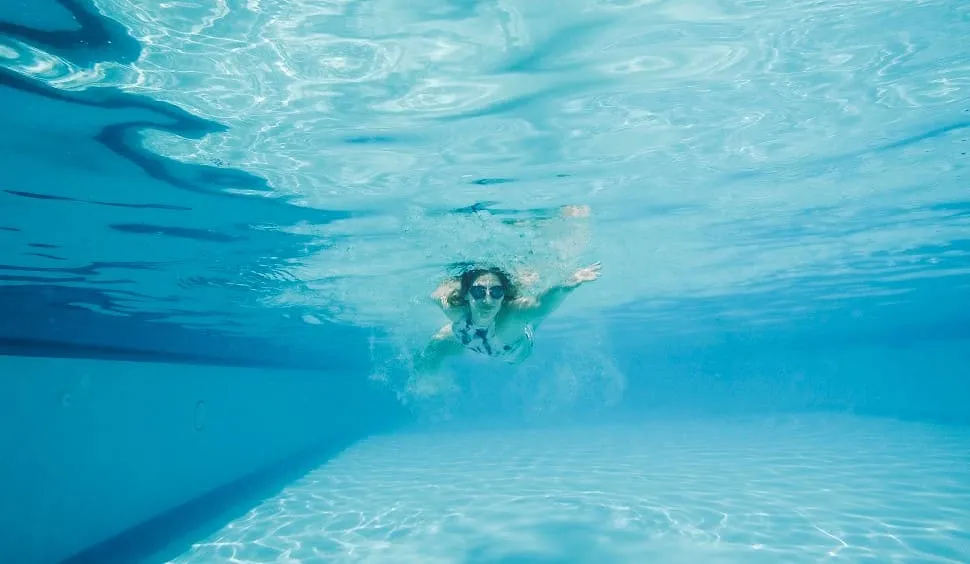
Survival swimming is about staying calm, conserving energy, maintaining a workable position, and moving toward safety when conditions allow. These skills are not a substitute for supervision or appropriate safety equipment, but they are an important part of becoming more capable in the water.
Floating and resting positions
Floating gives a swimmer a way to pause and reduce unnecessary movement. A back float keeps the face above the surface when the swimmer can find a balanced position and breathe calmly.
Because bodies and conditions differ, floating should be learned and practiced with instruction. The useful skill is not holding one perfect pose; it is knowing how to regain a position where breathing becomes more controlled.
Treading water
Treading water helps a swimmer remain upright with the head above the surface. Coordinated arm and leg movements provide support without requiring the swimmer to travel forward.
Efficient treading matters more than frantic effort. A coach can introduce the movement gradually and help the swimmer find a rhythm that uses less energy.
Breath control
Panic and rushed breathing make any situation harder. Practicing a steady exhale, a controlled inhale, and a return to a float or tread can help a swimmer focus on the next action.
Breath control also supports regular swimming. When breathing fits into the movement, the swimmer is less likely to lift the head, lose body position, or spend energy fighting the water.
Moving toward safety
Survival swimming may include using a controlled stroke to reach the wall, a nearby exit, or another safe point. Long, steady movements can be more sustainable than splashing or sprinting without a plan.
Conditions matter. Currents, waves, cold water, clothing, and distance can change what is safe, which is why emergency skills should be taught in an appropriate environment rather than improvised during a crisis.
Orientation and signaling
A swimmer needs to look for a clear exit, nearby help, or a stable point of reference. If moving is not the safe choice, conserving energy and signaling for help may be more useful.
The sequence is simple to remember: regain breathing, find a support position, assess the surroundings, and choose the safest available action.
Build these skills through instruction
Survival skills depend on practice. Reading about a float or tread cannot replace learning how it feels in the water with a qualified instructor present.
SwimTec’s private swim lesson programs build water comfort, breathing, floating, movement, and safer pool habits around the swimmer’s current ability. Adults who want a private, judgment-free starting point can also explore adult swim lessons in Gainesville.
Water safety is a progression, not a single test. Book a private SwimTec lesson to practice foundational skills with focused instruction.