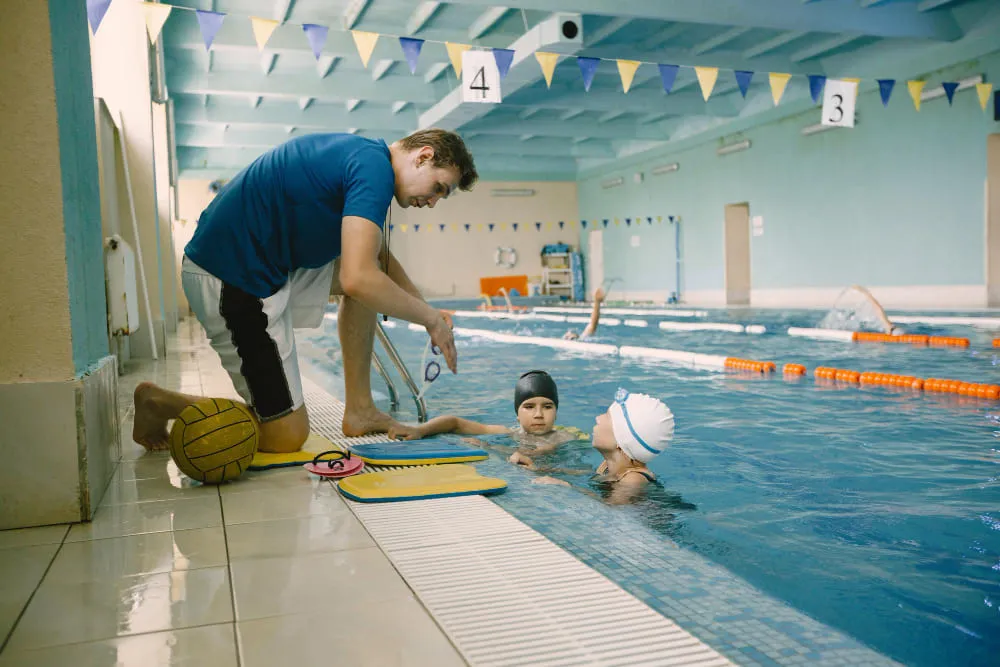
A professional swimming instructor gives a swimmer something that is difficult to get from a video or a crowded lane: feedback tied to what is happening in that moment. That can help a beginner build confidence, an adult coordinate breathing, or an experienced athlete refine a stubborn part of the stroke.
Why individual feedback matters
Swimmers do not arrive with the same comfort, movement patterns, or goals. A group progression may work well for one person and move too quickly or slowly for another. In a private lesson, the instructor can observe one swimmer, explain one skill in a useful way, and adjust the next repetition immediately.
That attention is valuable for fundamentals such as floating, breathing, kicking, and body position. It also supports more technical work on a catch, turn, start, underwater, or stroke rhythm.
Match the instructor to the goal
The right instructor should have experience with the swimmer’s age, current ability, and objective. A toddler beginning independent lessons needs a different teaching approach than a competitive swimmer reviewing race footage. An adult working through fear needs patience and a pace that feels manageable.
Ask how the instructor approaches that specific goal. Clear communication matters: the swimmer should understand what they are practicing, and the instructor should listen when a cue or drill is not connecting.
SwimTec’s private swim lesson programs cover babies with caregivers, toddlers, children, teens, adults, adaptive swimmers, team preparation, and technical coaching. That range makes it easier to start with the program rather than forcing every swimmer into the same lesson format.
What to expect in a first lesson
A useful first session begins with context. The instructor needs to know the swimmer’s water history, current comfort, and reason for coming. In the water, the coach can observe the starting point and choose a small number of priorities.
For a beginner, that might mean a supportive entry, breath control, floating, or moving toward the wall. For a more experienced swimmer, it might mean watching body position, timing, breathing, or how technique changes with effort.
The session should build from one step to the next. Repetition gives the swimmer time to understand the cue and lets the instructor see whether the change is becoming more dependable.
Set a goal you can recognize
“Get better at swimming” is understandable, but it is hard to measure. A more useful goal describes what the swimmer wants to do: put the face in calmly, float with control, complete a length with coordinated breathing, learn the four competitive strokes, or see a technical pattern on video.
Progress is not always a faster time. It can be less tension, a steadier breath, fewer pauses, a more stable body line, or the ability to repeat a skill without a prompt. Those changes give the swimmer and instructor a clear basis for the next lesson.
Practice between lessons with purpose
If the swimmer has safe access to an appropriate pool, short, focused practice can reinforce what happened in the lesson. The key is to repeat the agreed skill rather than add several new ideas at once.
For children, families can support progress by keeping the message simple and positive. For adults and competitive swimmers, a brief note about what felt easier or harder can help the instructor plan the next session.
Use the setting that helps you learn
SwimTec’s Gainesville facility offers private, appointment-only instruction in an indoor setting. Orlando sessions take place at Rosen Aquatic & Fitness Center. The program, location, and instructor should all support the swimmer’s actual goal.
A good lesson makes the next step clearer. Book a SwimTec lesson when you are ready for focused instruction shaped around the swimmer in front of the coach.