Strength and conditioning can support a swimmer’s power, stability, mobility, and ability to hold technique. The best starting point is not the heaviest weight or the hardest workout; it is a clear goal, sound movement, and a plan that fits around time in the pool.
Define what the training should support
Start with the reason for adding dry-land work. A sprinter may care about power from the start and walls. A distance swimmer may want better control of body position late in a race. Another swimmer may be focused on general strength, mobility, or shoulder stability.
A specific purpose helps narrow the exercise choices. It also makes it easier to decide whether the work is helping where it matters: in the swimmer’s movement, practice quality, and ability to repeat technique.
Choose movements with control
Strength training for swimmers should involve the whole body. Squats, hinges, lunges, pulls, presses, carries, core work, and appropriate shoulder-stability exercises can all have a place, depending on the athlete and the plan.
Quality matters more than load. A swimmer should be able to control the movement before adding resistance. Dumbbells, resistance bands, kettlebells, and barbells are tools; none is automatically right for every person or goal.
Fit dry-land work around swimming
Gym work is only one part of the training week. A hard strength session placed next to an important pool set may leave the swimmer too tired to move well in either setting.
Look at the whole schedule: practices, meets, school or work, sleep, and recovery. Begin with a manageable amount of work and adjust based on how the swimmer responds. More training is useful only when it can be completed with good movement and recovered from well enough to support the next session.
Warm up for the work ahead
A warm-up creates a transition into training. Dynamic movements, controlled range-of-motion work, and light resistance can prepare the body for the exercises in that session.
The warm-up should match the plan. If the session includes pulling, pressing, or overhead work, the preparation should include the shoulders, upper back, and trunk. If the focus is lower-body strength, hips, ankles, and the movement pattern deserve attention before the load increases.
Track more than weight on the bar
A simple training log can record exercises, sets, repetitions, resistance, and how the session felt. For a swimmer, the most useful notes may also include what happened in the pool afterward.
Did body position feel easier to hold? Did turns remain controlled? Was the swimmer unusually sore or unable to maintain technique? Patterns over time can help a coach and athlete adjust the plan with more context than a single number provides.
Keep technique connected across settings
Dry-land strength cannot fix every stroke issue, and a technical correction in the pool does not replace appropriate strength work. The two can inform each other. A swimmer who understands the body position or timing they are trying to create has a clearer reason for each exercise.
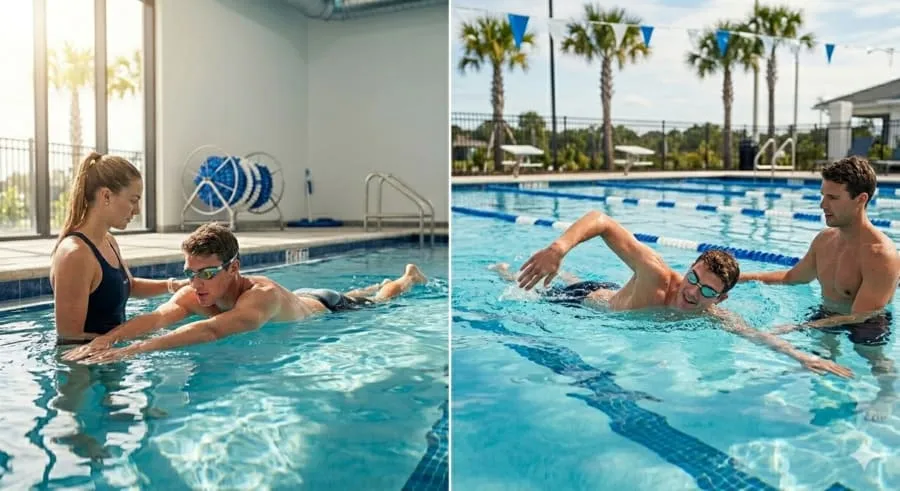
Stroke analysis and technique coaching can identify where a swimmer is losing alignment, stability, or efficiency in the water. That information can help frame a more useful conversation with the qualified professional overseeing the athlete’s strength program.
Ask for qualified guidance
Starting with professional supervision is especially useful when an exercise is unfamiliar, a swimmer is returning from an injury, or training is being designed for a young athlete. The coach should understand the swimmer’s experience, current workload, and goals before increasing complexity or resistance.
SwimTec’s Gainesville location focuses on private swim instruction and technical coaching. It does not replace medical care or a personalized strength plan, but pool-based feedback can clarify what the swimmer is trying to support on dry land.
Ready to examine how your technique holds together in the water? Book a SwimTec coaching session and bring your current training goal.